
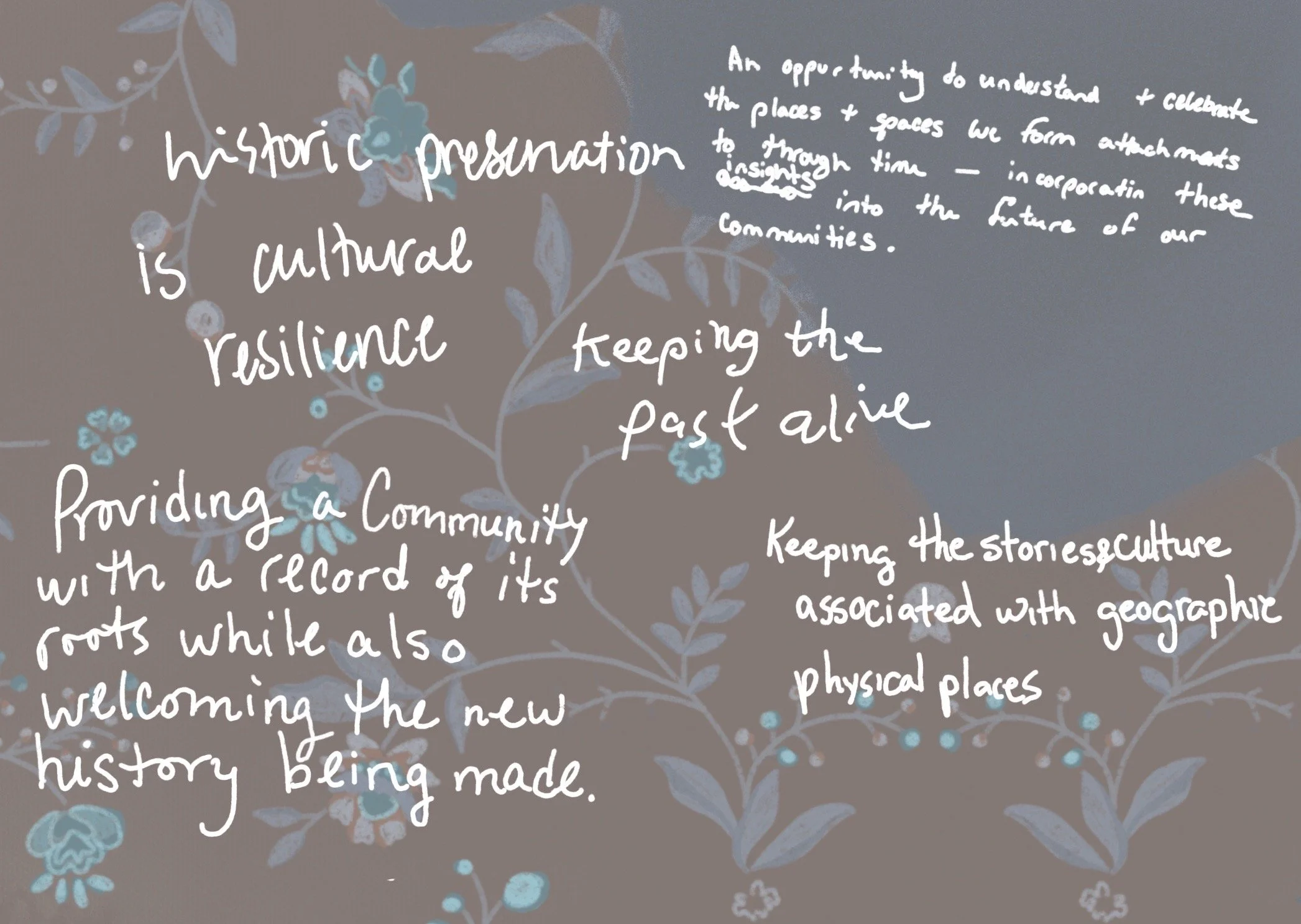
What is your definition of historic preservation? This question was asked to attendees of the "What’s the Issue? Emerging Professionals Tackle Preservation’s “Relevancy Problem*” session at Colorado Preservation, Inc.'s Saving Places Conference last week.
Your personal definition of historic preservation guides your daily work; how you choose to define historic preservation is a reflection of values, perceived possibilities, and desired impact. As we work to shift the preservation movement, self defining historic preservation holds a lot of power. Let’s continue the conversation - share your definition of historic preservation in the comments.
*Presenters: Rikki Riojas, Michael Lopez, and Aubrey Noble; Moderator: Me
Audience Definitions Featured in Image:
+ An opportunity to understand and celebrate the places and spaces we form attachments to through time - interpreting these insights into the future of our communities.
+ Keeping the past alive
+ Historic preservation is cultural resilience
+ Providing a community with a record of its roots while also welcoming the new history being made
+Keeping the stories and culture associated with geographic physical places
For preservation to be a movement, we must uplift the many. We must celebrate preservationists, from the grandmas who hold stories for every image in a photo album to the professionals who have tirelessly worked improve preservation practices.
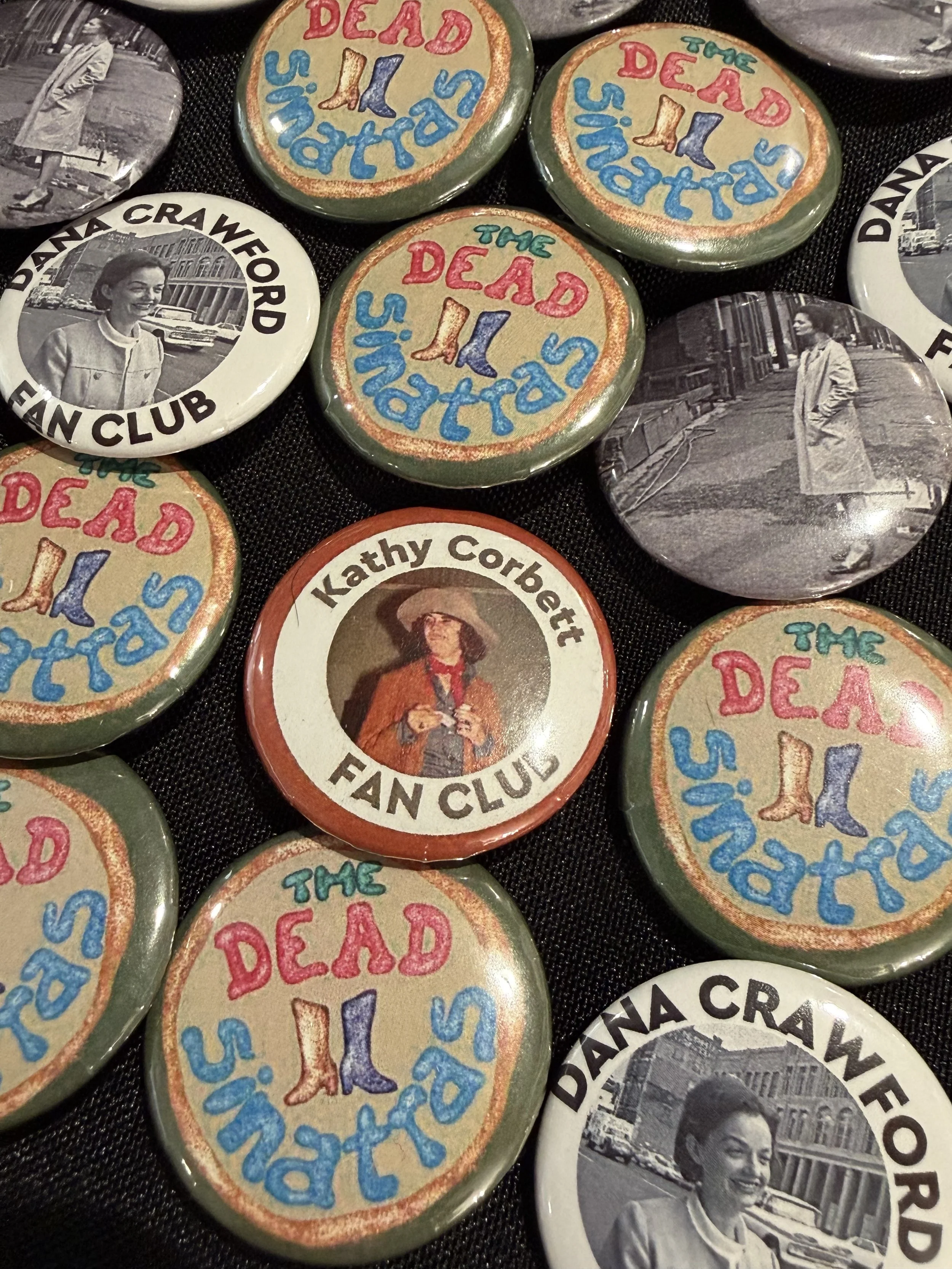
Last year I kicked off the Dana Crawford Fan Club as a way to pay an homage to the woman who shaped the contemporary preservation movement in Colorado (and beyond). When preparing for the @cudenvermshp table for @coloradopreservation‘s Saving Places conference this year, I knew we had to celebrate Kathy Corbett.
Kathleen (Kathy) Corbett teaches Historic Preservation at the University of Colorado Denver every Fall. This course introduces the history, methodology, and goals of historic preservation to graduate students and is a required course for Dana Crawford Historic Preservation Program students.
As an architectural historian @corbett_ahs has written historic designations, performed surveys, and more. When she is not researching/teaching history, she is making it as a member of The Dead Sinatras. “The Dead Sinatras were a legendary lesbian band in Denver who weren’t afraid to fight fire with silliness in the ‘90s and 2000s. The queer community in Denver has a strong tradition of using music as a form of activism. The Dead Sinatras want to remind the city’s LGBTQ+ community of its past and encourage musical activism to continue in the present and future.” - @kristen.fiore
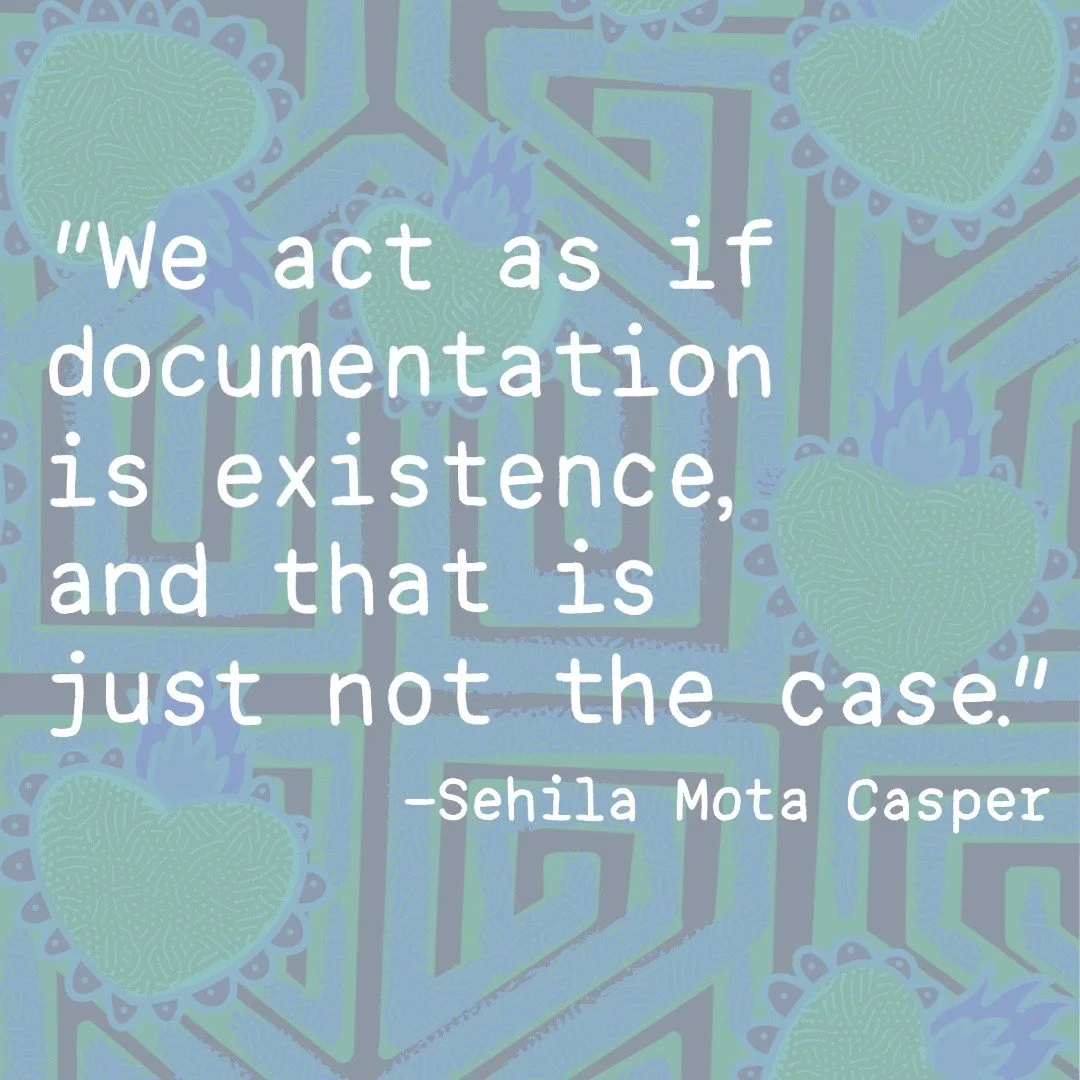
“We act as if documentation is existence and that is just not the case” - Sehila Mota Casper, during Colorado Preservation, Inc.’s 2026 Saving Places plenary
Narrowly defining what constitutes as documentation can minimize the value of - oral histories, art, traditional practices etc.. A culture, moment, buildings, places, etc. all exist even if a National Register of Historic Places designation hasn’t been written.
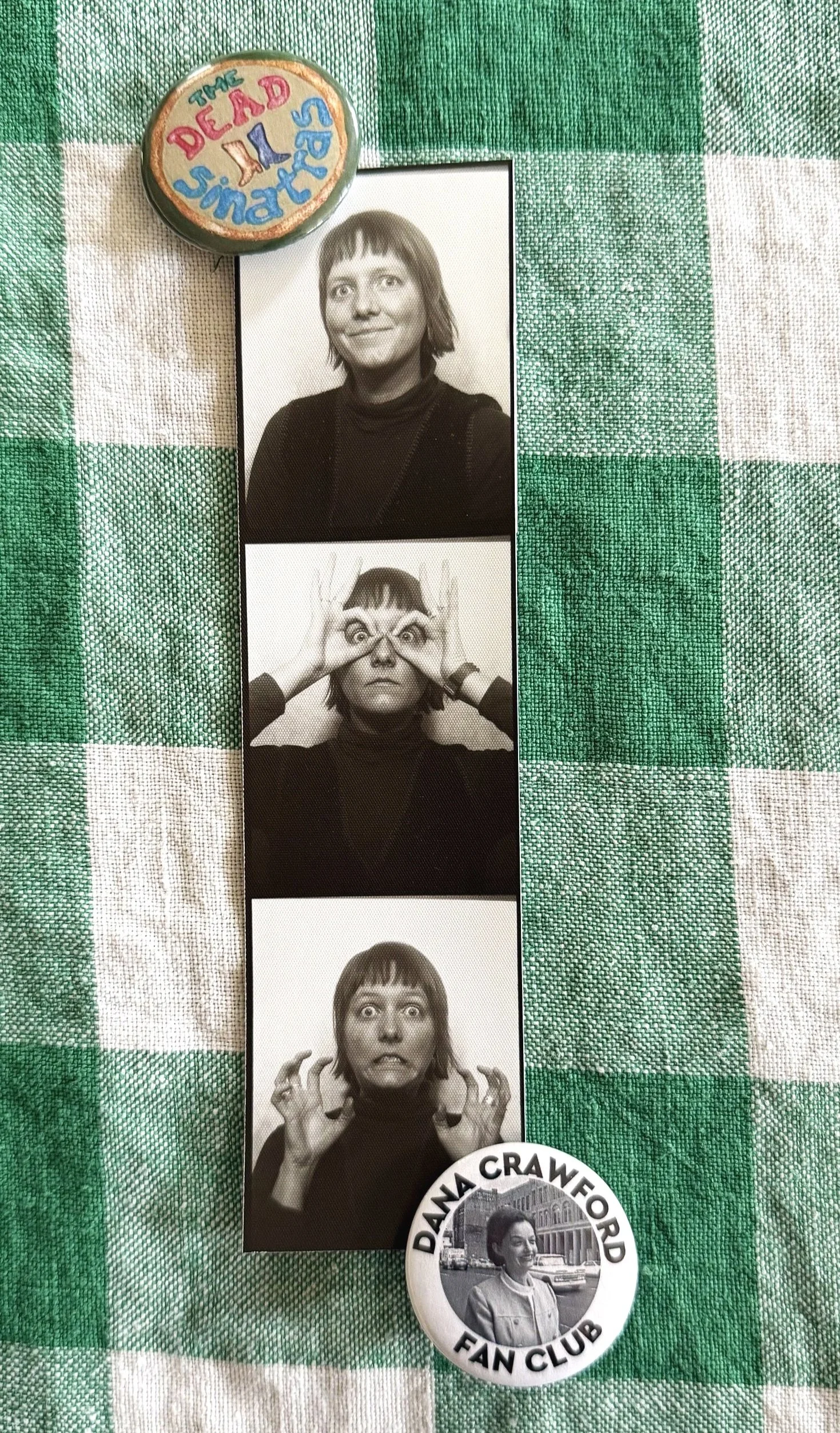
Life Rule: If you see a Photo Booth, you use a Photo Booth. Bonus points if the Photo Booth is from the 1950s and restored by @photobangco, found at @cpacphoto.
This is the second year I’ve found a photobooth during the @coloradopreservation’s annual Saving Places conference. A way to mark the passage of time and my work with the @cudenvermshp program. A big thanks to every student in this program and others who makes the time to reach out to me. Our conversations and your perspectives are invaluable.